


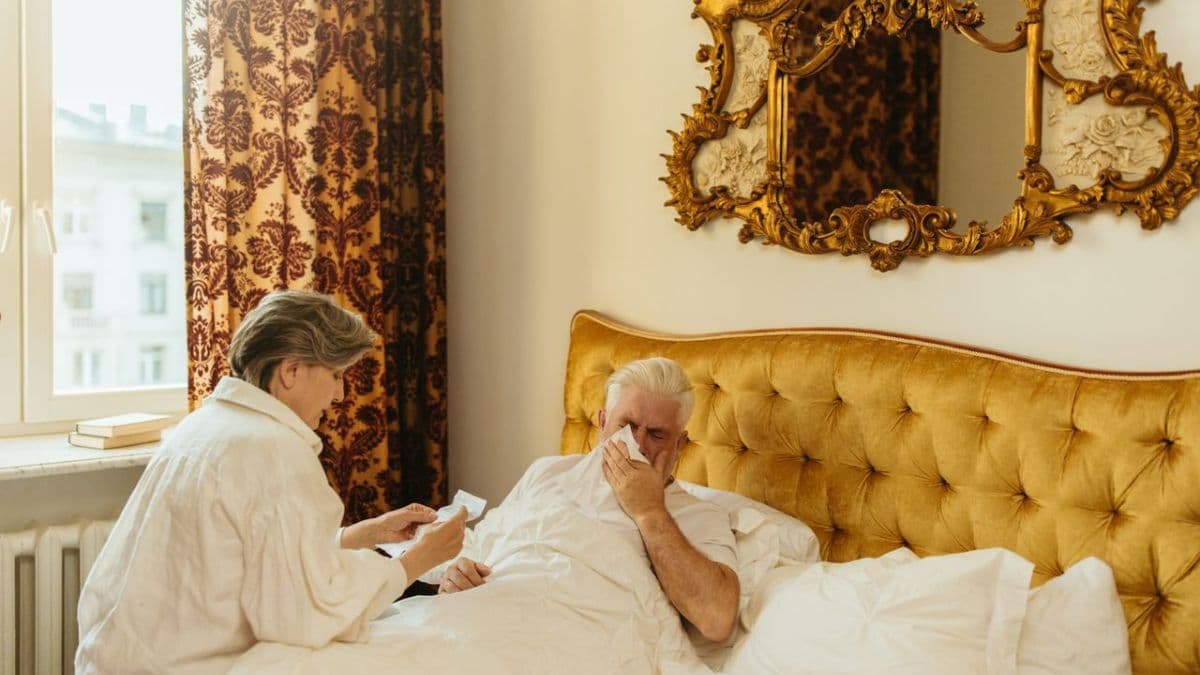
Public health researchers in the UK have performed a years-long study into whether putting portable HEPA filter air purifiers into elderly care home residents’ bedrooms can prevent respiratory illnesses. The results make for depressing reading.
Contrary to expectations, a Bristol University led team of medical doctors, epidemiologists and public health experts relate in a JAMA Internal Medicine article how they found that portable HEPA filter air purifiers do not prevent respiratory illness in care homes. The researchers don’t, however, blame this failure entirely on the machines not working as anticipated.
Before you reflexively yell, ‘But the lab data shows air purifiers work!’ There is an important factor to consider. The researchers designed this trial to reflect real world outcomes rather than a perfect clinical environment. So the way that the care homes used the HEPA filter air purifiers in real life was just as significant as which type of air purifier was supplied.
Air Purifiers in Care Homes
The researchers concluded that putting portable air purifiers in care home residents’ rooms is unlikely to help with respiratory illness symptoms. Not only are HEPA filters an expensive consumable, they add another task to already overwhelmed workers. What’s more, noisy fans creating cool breezes in the winter might not make for a comfortable night’s sleep for some residents.
Low adherence was not the only possible problem. The academics pointed out that air purifiers could produce a false sense of security, leading to care providers neglecting to take regular hygiene precautions when dealing with residents. This was illustrated as the researchers tracked respiratory infection rates following the COVID-19 pandemic as care homes stopped using infection prevention and control methods. During the pandemic, infection rates were low but as staff discontinued the precautions, more residents got sick, and for longer.
The results of this three-year long, clinical trial, including over 1000 elderly care home residents in 76 care homes across England, showed that there was no difference in respiratory illness when air purifiers land in residents’ bedrooms. However good the intention, it’s not worth the expense of putting portable air purifiers in every room if they will sit gathering dust or just don’t work as well as the manufacturers claim.
A Randomized Controlled Trial
The researchers designed a randomized controlled study to test whether air purifiers in care home bedrooms and in communal areas would reduce symptoms of respiratory infections in residents and decrease the number or sick days used by employees. The researchers invited care homes with 20 or more residents, focusing on residential care for older adults. They must be rated ‘good’ or above by England’s Care Quality Commission, not already using portable air purifiers to apply to take part in the trial.
The 91 care homes that were eligible to take part and were able to get consent, where appropriate, from staff and residents were split at random into two groups. One group would continue as normal, other than staff collecting data on respiratory symptoms.
Care homes in the other group would place portable air purifiers in communal areas and in bedrooms of consenting residents. Participants agreed to give the researchers, from Bristol University, access to their medical records.
Consenting Older Adults
The control group included 592 residents living in 47 care homes that would not use portable air purifiers. Staff at each care home provided daily data about these anonymized participants.
Residents of the 48 care homes to which researchers assigned portable air filters either had a portable air filter in their bedrooms (208 participants) or there would be one in their communal spaces (369 participants). Statistitians were careful to keep these groups separate in the analysis.
The trial team gave each care home a set of identical air purifiers based on the number of residents and the building’s floor plans. They gave one AC2936/33 HEPA filter for each of up to 16 residents, set on the quietest sleep setting, providing a CADR of 60 m3/h.
The study ran for three years from January 2021 to December 2024, with residents randomized into the trial each winter. The care homes were very similar in terms of architecture and residents and were just as likely as each other to have waves of respiratory illness each winter. Significantly, the trial coincided with the second year of the COVID-19 epidemic in the UK.
Blinding was not possible, other than for the statisticians who analysed the data, because it would be so obvious if a sham unit were not turned on and a unit with no filter blowing air around could cause harm. The team considered the idea that staff in care homes might inadvertently favour reporting shorter duration of residents’ symptoms.
Did Portable Air Purifiers in Care Homes Prevent Respiratory Illness?
At the end of the trial, researchers accessed consenting participants’ medical records and care home records or staff absenteeism. Statisticians crunched the numbers four ways to Sunday, but did not find a scenario where care homes with portable air purifiers in care home residents’ bedrooms helped.
Residents who had an air purifier in their room experienced 0.99 respiratory infections each winter, on average, while residents with no air purifier had 1.04 infections, on average, each winter. This was such a small difference that it was very likely to have occurred by chance. If they were to repeat the trial, the chances are that the numbers might be reversed.
There was a very small reduction in some symptoms of respiratory illness, including fever and delirium in residents with air purifiers in communal areas. The difference, however, was not statistically significant and as considered earlier, the staff might have reported more optimistically about the duration of symptoms knowing they had a filter.
There was no reduction in the number of staff sick days or infection outbreaks reported by care homes provided with air purifiers.
The biggest difference they noted was in costs incurred by care homes. They calculated that the care homes would need to spend around £10,275 each over the first five years to introduce and run the air purifiers. Across all 15,000 residential care homes in England, it could cost as much as £154 million to deploy them at every site.
Sources
Testing whether air filters can prevent winter respiratory infections (including COVID-19) in care homes. ISRCTN Registry. doi:10.1186/ISRCTN63437172
Hay AD, Brierley RCM, Turner N, et al. High-Efficiency Particulate Air Filters to Prevent Winter Respiratory Infections in Care Homes: The AFRI-c Cluster Randomized Clinical Trial. JAMA Intern Med. Published online July 27, 2026. doi:10.1001/jamainternmed.2026.2199
