


Walk into most dental practices and the conversation around damaged teeth still follows a familiar path it had for decades. You come in, the problematic tooth is assessed, a treatment plan is proposed, and that plan will almost certainly involve removing tooth structure – sometimes a lot of it – to make way for a crown, a post, or a filling that bears little resemblance to what was originally there. The thinking behind this approach hasn’t changed dramatically in a long time: get rid of the compromised material, replace it with something hard and durable, and call it done.
But something else is happening in a growing number of practices. This philosophy that’s been building quietly in dental research circles for the better part of thirty years is now moving into mainstream clinical practice – and it starts from a fundamentally different question. Not the commonly accepted “how do we replace what’s broken?” but questioning the fundamentals like “how does a natural tooth actually work” and “can we rebuild something that behaves the same way?”
That question is the foundation of biomimetic dentistry.
Nature as the Blueprint
This new word itself tells you something. Biomimetic – from the Greek bios (life) and mimesis (imitation) and, it describes an approach that takes its cues from the architecture and mechanics of natural tooth structure rather than substituting it with something foreign.
Healthy teeth are not simply hard. They’re a layered, dynamic system. Enamel – the outermost surface – is one of the hardest biological materials that exists, but it sits over dentin, which is considerably more flexible. This difference is deliberate. When you bite down, enamel absorbs the initial force and dentin cushions the stress, distributing it in a way that prevents fracture. The tooth flexes, ever so slightly, and recovers. The pulp at the centre remains protected.
Conventional restorations tend to interrupt this system rather than replicate it. A porcelain crown is rigid. When it meets the more flexible dentin beneath it, the stress distributes unevenly – often concentrating at the margin between the restoration and the remaining tooth. Over time, this mismatch is one of the primary reasons teeth crack under crowns, or why secondary decay develops at restoration edges. The crown may be intact. The tooth underneath may not be.
Biomimetic approaches try to preserve and reinforce the system that already exists. The goal is a restoration that flexes with the tooth, bonds to it at a molecular level, and distributes force the way natural enamel and dentin would.
The Techniques Behind the Philosophy
Several specific procedures and materials define biomimetic practice in clinical settings.
Immediate Dentin Sealing (IDS) is one of the more significant ones. Immediately after preparation, the exposed dentin surface is sealed with an adhesive resin before the impression is taken or the restoration is seated. This matters because dentin is alive – it contains tubules that connect to the pulp, and exposing them to bacteria or contaminants during the period between preparation and final restoration is a common source of post-treatment sensitivity and long-term pulp inflammation. IDS closes those tubules promptly, dramatically reducing the insult to the nerve. Studies comparing IDS to conventional delayed bonding have consistently shown lower rates of post-operative sensitivity and better long-term bond strength.
Stress-reduced restoration design addresses the way force moves through a prepared tooth. In conventional preparation, creating a deep box or steep walls concentrates stress at angles that the underlying tooth structure handles poorly. Biomimetic preparation geometry is shallower, with curved internal walls that mimic the natural stress-distribution profile of the tooth. It looks different from what most dentists learned. The outcomes, particularly on posterior teeth, show meaningfully lower rates of crack propagation and cuspal fracture.
Layered composite placement takes composite resin – a material that has been in dentistry for decades – and applies it in the way tooth tissue actually exists: in layers with different optical and mechanical properties. Each applied layer is individually adapted and cured, building up a restoration that has a gradient of stiffness from the internal surface outward, rather than a single monolithic block. The result is a restoration that behaves more like a natural tooth under load and, critically, reflects light in a way that makes it almost indistinguishable from surrounding enamel.
Adhesive bonding at the enamel-dentin junction replaces mechanical retention with chemical adhesion. Conventional preparations often rely on creating shapes that physically hold a restoration in place – undercuts, boxes, retention grooves – which requires removing tooth structure specifically to achieve that mechanical grip. Adhesive bonding achieves retention through chemistry, which means far less healthy teeth need to be sacrificed. The bond strengths achievable with modern adhesive systems are genuinely formidable; long-term clinical data now spans two decades in some studies.
What the Research Is Showing
The academic literature on biomimetic dentistry has grown substantially in recent years, and the findings are consistent enough to take seriously.
A landmark study published in the Journal of Conservative Dentistry tracked adhesive restorations placed using biomimetic principles over a twenty-year period. Retention rates and marginal integrity exceeded those typically reported for conventional restorations in comparable studies. The Alleman Center for Biomimetic Dentistry, one of the primary training institutions in the field, reports clinical evidence of restorations remaining bonded and intact at the twenty-year mark – a timeframe that genuinely challenges the narrative that adhesive restorations are inherently less durable than crowns.
More recent research has extended the framework beyond individual restorations. Biomimetics in dental restorative materials has shifted from simply copying the appearance of natural teeth to understanding how those tissues actually behave – how enamel and dentin respond to stress, interact with their surroundings, and change over time. This shift toward functional biomimicry, rather than purely aesthetic mimicry, is what distinguishes contemporary biomimetic dentistry from earlier iterations of adhesive and aesthetic approaches.
Recent advancements have been further driven by innovations including antimicrobial composites, smart composites, self-healing composites, self-adhesive systems, titanium oxide nanoparticle-based composites, and nanohydroxyapatite scaffold-based composites. These aren’t speculative materials – they’re entering clinical use, and each one addresses a different limitation of conventional restorative approaches. Self-healing composites, for instance, contain encapsulated monomers that release and re-polymerise when a microcrack forms, potentially extending restoration lifespan significantly.
Strategies employing controlled crystallite alignment and engineered organic-inorganic interfaces have enabled significant progress in fabricating enamel-mimetic materials – materials that replicate not just the appearance of enamel but its hierarchical structure, which is the source of its remarkable combination of hardness and fracture resistance.
A Crown You Might Not Need
One of the most practically significant claims of biomimetic dentistry is straightforward and, for patients, immediately compelling: in a meaningful proportion of cases where a conventional approach would result in a crown, a biomimetic approach can restore the tooth without one.
This isn’t universally applicable. Teeth that are severely broken down, already endodontically treated, or structurally compromised beyond a certain threshold may still require a crown. But the threshold is different under a biomimetic philosophy. Provided enough sound tooth structure remains, a well-bonded adhesive restoration – an inlay or onlay built to biomimetic specifications – can restore strength and function while preserving far more of the original tooth.
The clinical and economic implications compound over time. A crown preparation removes somewhere between 63 and 72 percent of coronal tooth structure on average. That structure is gone permanently. If the crown fails – and all restorations eventually fail – the next intervention has less to work with. If that tooth eventually requires extraction and an implant, the crown preparation contributed to the timeline by leaving a more fragile structure in place. Biomimetic restorations that preserve more tooth, distributed over a patient’s lifetime, can materially reduce the cumulative burden of dental intervention.
The Practitioners Leading the Shift
Biomimetic dentistry isn’t yet standard training in most dental schools. It’s taught through postgraduate programmes, specialist centres, and dedicated institutions – which means the practitioners most fluent in it have actively sought the training out, usually after years in conventional practice.
Dr. Marc Lazare is one of only a few dentists in the entire New York City area trained in and practicing biomimetic dentistry – a figure that, in a city of nine million people, illustrates how concentrated this expertise still is. His practice at biomimetic dentistry in Manhattan operates from a foundation that most practices don’t: the application of biomimetic principles not just to individual restorations but to full smile design and rehabilitation cases. Dr. Lazare is currently the President of the Academy of Biomimetic Dentistry, has authored two books on the subject, and lectures internationally on biomimetic principles and smile design.
The Academy of Biomimetic Dentistry, the field’s primary professional body, maintains a directory of certified practitioners and offers training pathways for dentists looking to integrate these techniques. The Alleman-Deliperi Centre runs intensive mastership programmes that take dentists through the core protocols in a structured clinical environment.
That the expertise remains this concentrated suggests the field is still in its dissemination phase – established enough to have two decades of clinical evidence behind it, not yet universal enough to be the default.
The Patient Conversation Is Changing
Perhaps the most significant shift – biomimetic dentistry is driving isn’t technical. It’s the conversation that happens before treatment begins.
In a conventional restorative context, patients are often presented with a fait accompli: the tooth is broken, it needs a crown, here’s the timeline and cost. The decision tree is short because the clinical options are narrow. Under a biomimetic philosophy, the conversation is more open. What is the condition of the remaining tooth structure? What are the realistic outcomes of a conservative approach versus a conventional one? What does the patient’s long-term oral health plan look like, and how does this single decision fit into it?
This requires more clinical time and more patient education. It also tends to produce better-informed patients who understand why a restoration is being done a particular way – and who are more likely to maintain their oral health in a way that protects the investment.
The principle underlying all of it is simple, and it’s one that patients respond to intuitively when it’s explained: the best dental material in your mouth is the tooth structure you were born with. Everything dentistry does should work to preserve as much of it as possible for as long as possible.
Biomimetic dentistry, at its core, is the discipline of taking that principle seriously.
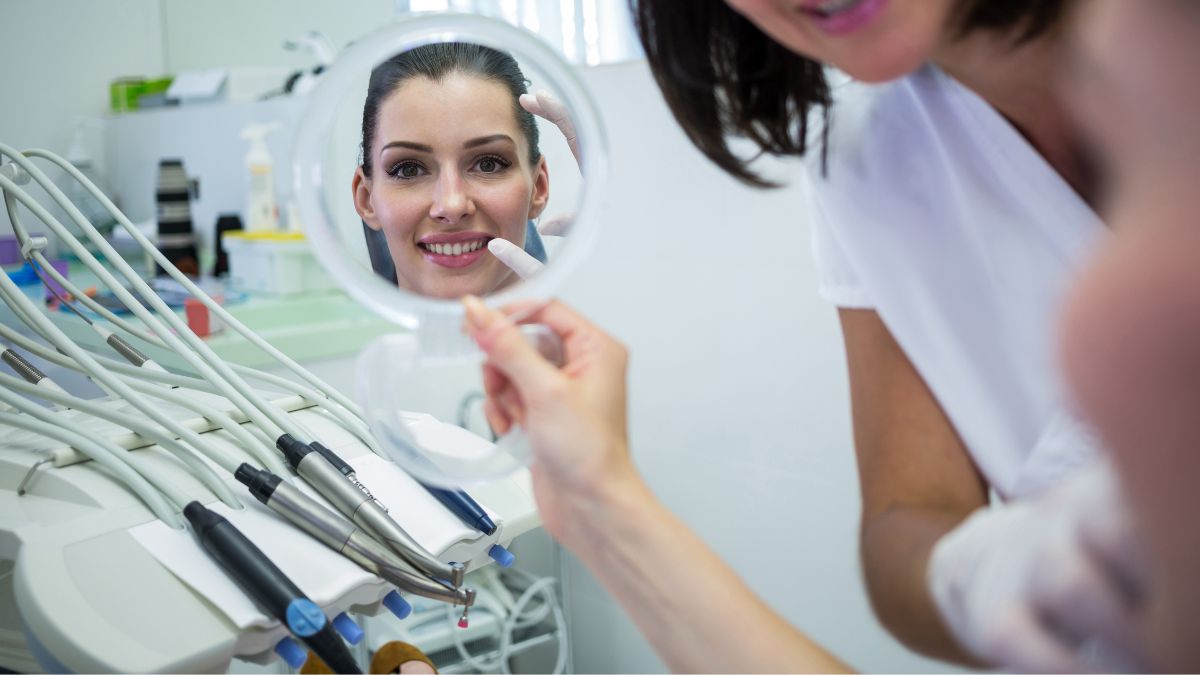
Image by wavebreakmedia_micro from magnific
The editorial staff of Medical News Bulletin had no role in the preparation of this post. The views and opinions expressed in this post are those of the advertiser and do not reflect those of Medical News Bulletin. Medical News Bulletin does not accept liability for any loss or damages caused by the use of any products or services, nor do we endorse any products, services, or links in our Sponsored Articles.
