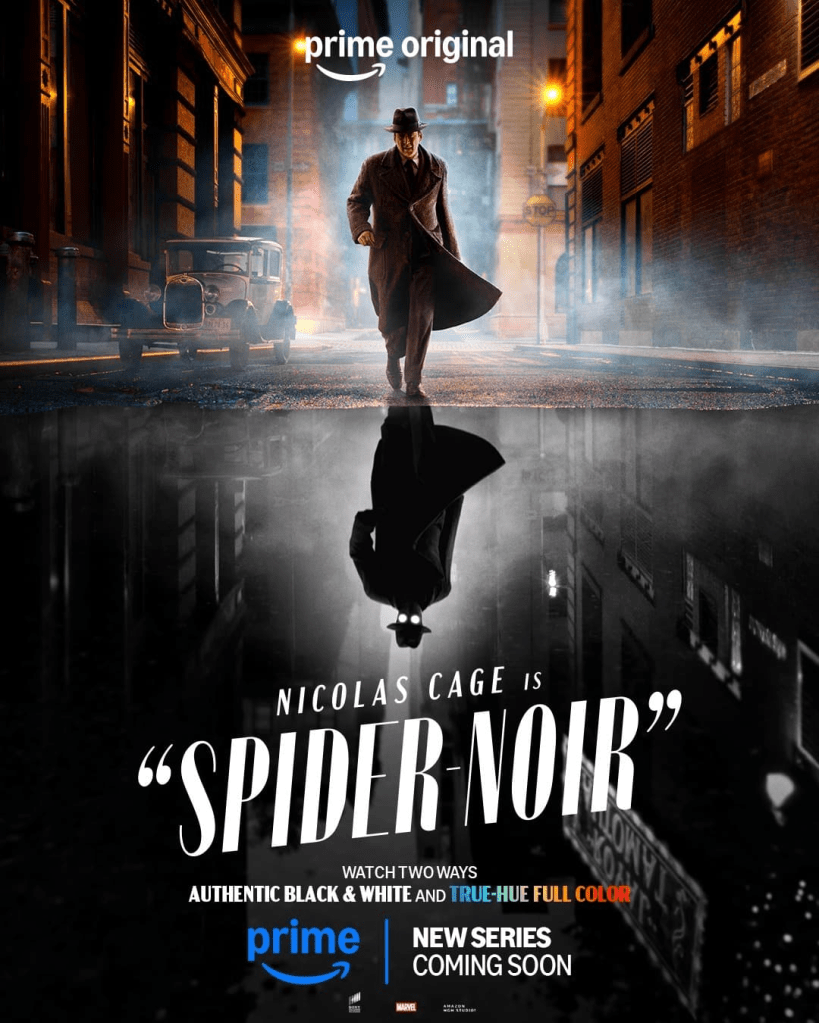



The long-awaited spinoff of the Sony animated Spider-Verse movies is officially here. Spider-Noir is now on Amazon Prime, and you can watch all episodes in both “authentic black and white” and “true hue full color” formats. In a recent interview, the Spider-Noir show’s creator, Oren Uziel, said the decision to release it in both formats was made early in the process and required extensive preparation. He explained, “The experience at the end is radically different, and I don’t think I expected it to matter that much.”
Having seen the first two episodes of Spider-Noir, one in black and white and the other in color, I can confirm that the presentation dramatically affects the viewer’s experience. While I won’t tell you one is objectively better than the other, there are pros and cons to each. So, which viewing option will you choose?
Authentic Black and White
I saw the first episode of Spider-Noir in black and white, and I was struck by how well it was lit for the format. It’s clear that the show, by necessity, was shot with high contrast lighting specifically for this presentation. I felt it immediately switched my brain into that classic film mode and allowed me to more easily understand how this world worked.
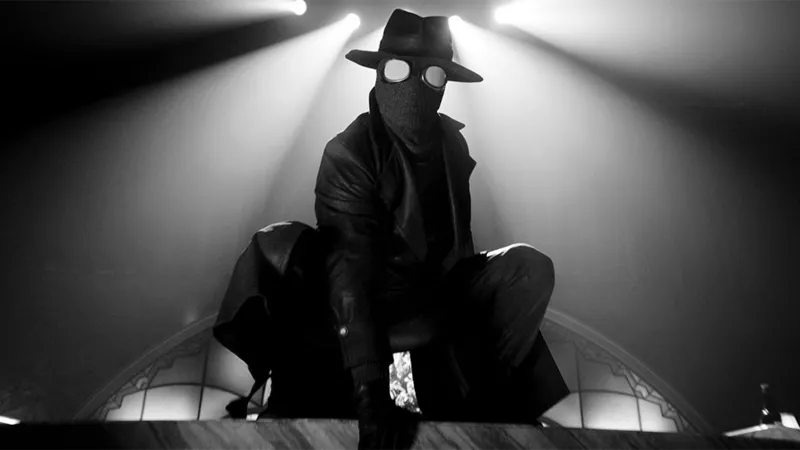
The downside to the black and white format is that, occasionally, certain things weren’t as clear as they could be. For example, there is a transformation in episode one, and it took me a little longer than it should have to figure out what exactly the intended effect was because the grey texture was all I had to go on. This is certainly a minor issue and should not dissuade anyone interested in trying out the authentic black and white version of Spider-Noir, but it’s something to be aware of if you do.
True Hue Full Color
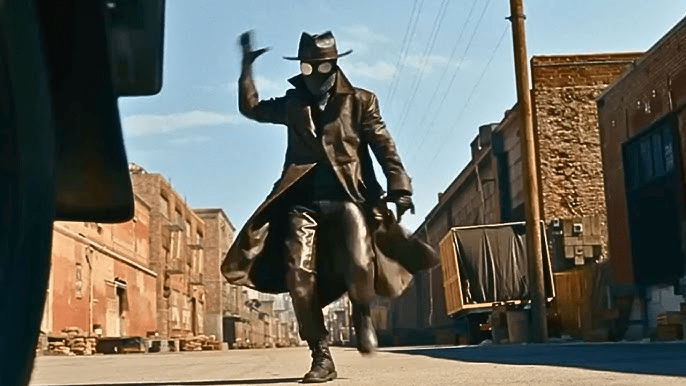
The second episode of Spider-Noir that I watched was a color presentation. The look of the “true hue” version definitely benefited from the requirements of shooting for black and white. High contrast lighting and bright, vibrant colors make every frame pop off the screen. Some of the more frantic action sequences also look a bit less chaotic than in their black-and-white counterpart.
While the color version of the show benefits from the black and white contrast and set design, some elements suffered. Certain backdrops, which look great in black and white, become a bit more obviously indoor sets in full color. I didn’t mind this too much because it added to the “old Hollywood” charm of the production, but I could see it lessening the immersion for some.
As you can see, there are elements to consider when choosing which version to watch. However, the great thing about the decision to release Spider-Noir in both black and white and color formats is that you don’t actually have to choose. Both are equally available on Amazon Prime and MGM+, and as the show’s creator, Oren Uziel pointed out, “if you watch both, there’s a much better chance we’ll get a season two.”
Stay tuned for our review of the show in due time.